7 Mistakes You’re Making with Your Document Security (And How to Stop AI Identity Fraud)

Strategic resilience necessitates a robust framework for document integrity. Security is not an event but a continuous audit of vulnerabilities within the operational landscape. As identity fraud evolves with synthetic AI-generated credentials, the preservation of personal and professional legacies requires a shift toward meticulous authentication protocols.
Document Security: A defined system for the protection, storage, and verified execution of high-stakes records.
1. Digital Misdirection: The Risk of Automated Correspondence
Precise communication is the primary defense against unauthorized data exposure.
The prevalence of auto-complete features in modern email clients frequently results in the transmission of sensitive information to unintended recipients. A single character error facilitates a breach of confidentiality that can compromise financial positioning or credit readiness.
Audit Protocol: Disable auto-complete for external domains.
Verification: Implementation of secondary confirmation steps before the final dispatch of sensitive attachments.
Infrastructure: Utilization of secure client portals for the exchange of high-value documentation rather than standard SMTP protocols.
2. Fragmented File Storage: The Hazard of Decentralized Records
Stability is found in organizational unity and centralized oversight.
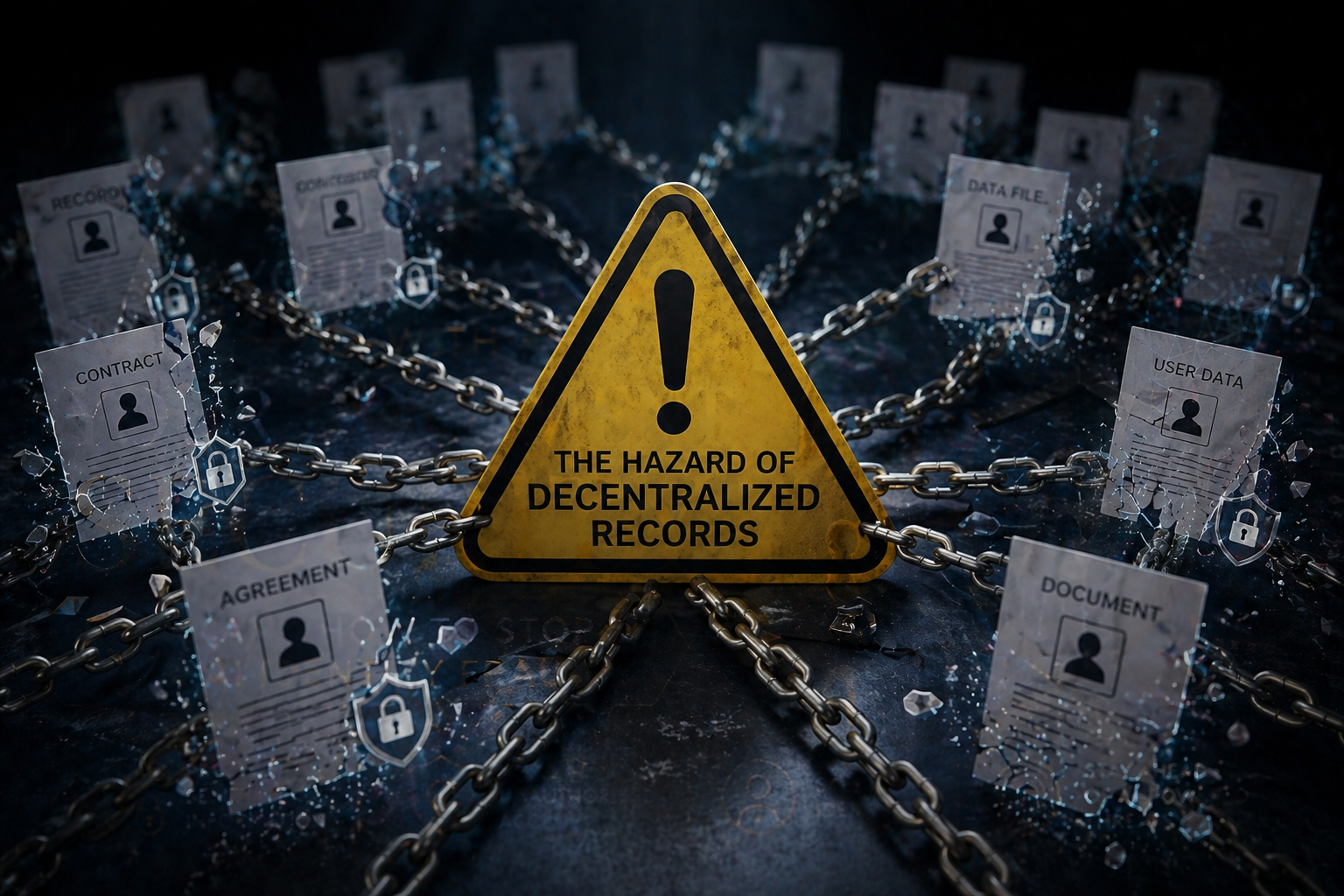
The distribution of critical files across multiple unsecured personal cloud accounts and physical drives creates a chaotic security environment. Fragmentation increases the surface area for cyberattacks and complicates the retrieval of essential documents during time-sensitive strategic readiness sessions.
Framework: Establishment of a single, encrypted repository for all legacy-related documents.
Resilience: Regular backups to localized, non-networked hardware to mitigate the impact of cloud-based breaches.
Accessibility: Logical indexing systems that allow for rapid location without compromising root security.
3. Physical Desktop Exposure: The Vulnerability of Tangible Assets
The physical environment requires the same level of security scrutiny as the digital realm.

Leaving sensitive papers, such as property deeds or financial statements, on desks or printers invites unauthorized observation. Physical security oversights remain a leading cause of localized identity theft. An organized workspace reflects a disciplined approach to information management and reduces the risk of accidental loss.
Clean-Desk Policy: The immediate removal of all sensitive materials to locked storage following the completion of tasks.
Visual Privacy: Orientation of workstations to prevent "shoulder surfing" by visitors or unauthorized personnel.
Mobile Security: Use of portable locking cases when transporting documents for notary authentication.
4. Non-Secure Document Liquidation: The Residue of Sensitive Data
Destruction is the final stage of a document’s lifecycle and requires absolute completion.
The disposal of printed materials containing PII (Personally Identifiable Information) in standard waste receptacles is a critical failure in the security chain. Malicious actors frequently exploit discarded financial records and credit applications to reconstruct identities. Professional-grade shredding is the only acceptable method for document termination.
Cross-Cut Shredding: Utilization of equipment that renders documents into unrecoverable particles.
Zero-Trace Policy: Implementation of a "shred-all" rule for any document containing non-public data.
Chain of Custody: Verification of secure destruction when utilizing third-party liquidation services.
5. Unencrypted Personal Hardware: The Danger of Mobile Mobility
Hardware mobility must be balanced with rigorous encryption frameworks.
The use of personal smartphones and laptops for the storage of professional documents introduces significant risks. Unencrypted devices are vulnerable to data extraction if lost or stolen. In an era of mobile, appointment-based support, the security of the hardware used to access financial profiles and credit resources is non-negotiable.
Full-Disk Encryption: Activation of native encryption tools (e.g., BitLocker or FileVault) on all mobile devices.
Biometric Authentication: Enforcement of multi-factor authentication for device access.
Remote Wipe: Capability to delete all data remotely in the event of hardware theft.
6. Unverified Document Execution: The Threat of Synthetic AI Identity
Authenticity is the cornerstone of legal and financial trust.
> AI Identity Fraud Warning: Synthetic IDs, deepfake-backed records, and AI-generated credentials now pass many basic digital checks. In-person verification remains a primary defense.

By 2026, AI-generated credentials and synthetic identities have reached a level of sophistication that bypasses standard digital checks. Deepfake-assisted background documentation allows fraudsters to present a veneer of legitimacy. Traditional remote verification methods often lack the nuance to detect these high-level deceptions.
In-Person Verification: The physical presence of a certified official provides a "human-in-the-loop" layer of security that AI cannot replicate.
Credential Scrutiny: Hands-on inspection of physical IDs for tactile security features (holograms, microprinting).
Behavioral Audit: Real-time assessment of signer demeanor and intent, ensuring the execution is free from duress or fraud.
7. Absence of Professional Authentication Oversight: The Gap in Strategic Defense
A legacy is only as secure as the mechanisms used to validate it.

Self-managed document authentication often leads to errors in execution, which can result in the rejection of critical paperwork or future legal disputes. Professional oversight ensures that every document meets the specific requirements for legal and financial validity, providing a resilient foundation for long-term growth.
Strategic Support: Engagement with experts who specialize in notary and document authentication services.
Mobile Precision: Utilizing services that bring the professional to the client, ensuring accuracy in a controlled, secure environment.
Procedural Accuracy: Adherence to the latest regulatory frameworks for document signing and notarization.
The 2026 Frontier: Combating AI Identity Fraud
The landscape of fraud has shifted from simple forgery to complex identity synthesis. Synthetic identities involve the creation of entirely new personas using a combination of real and fabricated data. In 2026, AI algorithms can produce high-fidelity driver’s licenses, birth certificates, and financial statements that appear flawless under digital inspection.
Priority Alert: AI identity fraud is no longer edge-case risk. It is a current document-security issue with direct implications for notarization, financial readiness, and legal acceptance.
Protection against these threats requires a multi-layered verification strategy. Automated systems must be supplemented by professional physical authentication. At Ascendia Legacy Group, our mobile, appointment-based model prioritizes this hands-on approach. By bringing the expert directly to the client, we provide a secure, professional layer of protection that ensures the integrity of every document.

Strategic Neutrality: The maintenance of an objective, professional distance while providing expert-level document support.
Our focus remains on precision, accuracy, and the result-oriented execution of your most critical documents. Through structured guidance and reliable mobile notary services, we ensure that your financial profile and legal documents are resilient against modern threats.
Quick Update for the Squad! 🌟
Hey everyone! Just a heads up that we’re constantly updating our security frameworks to stay ahead of the latest AI tech. If you’ve got a big signing coming up or just want to make sure your paperwork is bulletproof, hit us up! We love bringing the expertise right to your door (or favorite coffee shop) to keep things simple and safe. Catch you at the next session! ☕️📝